B4 vs. B6 vs. B7: A Comprehensive Guide to Ballistic Protection Levels
B4 vs. B6 vs. B7: A Comprehensive Guide to Ballistic Protection Levels
In the world of armored vehicles, understanding ballistic protection levels is essential for making informed decisions about safety. The designations B4, B6, and B7 (often referred to as BR4, BR6, and BR7 under the European CEN/EN 1063 standard) represent progressive tiers of ballistic resistance for vehicles, focusing primarily on bulletproof glass and armored body panels. These levels help executives, security professionals, and high-net-worth individuals select the right protection without over- or under-engineering their vehicles.
This guide breaks down each level, compares them directly, explains the testing methodology, materials involved, real-world implications, and how they fit into broader standards like VPAM, NIJ, and STANAG. Whether you're considering subtle armoring for a luxury SUV or evaluating options for corporate travel, this comparison provides clarity in 2026's security landscape.
![Armor Levels for Armored Vehicles: NIJ, CEN & VPAM Explained [2026 Guide] | Alpine Armoring® USA](https://assets.alpineco.com/large_ballistic_chart_1_95cf3dd7c0.jpg)

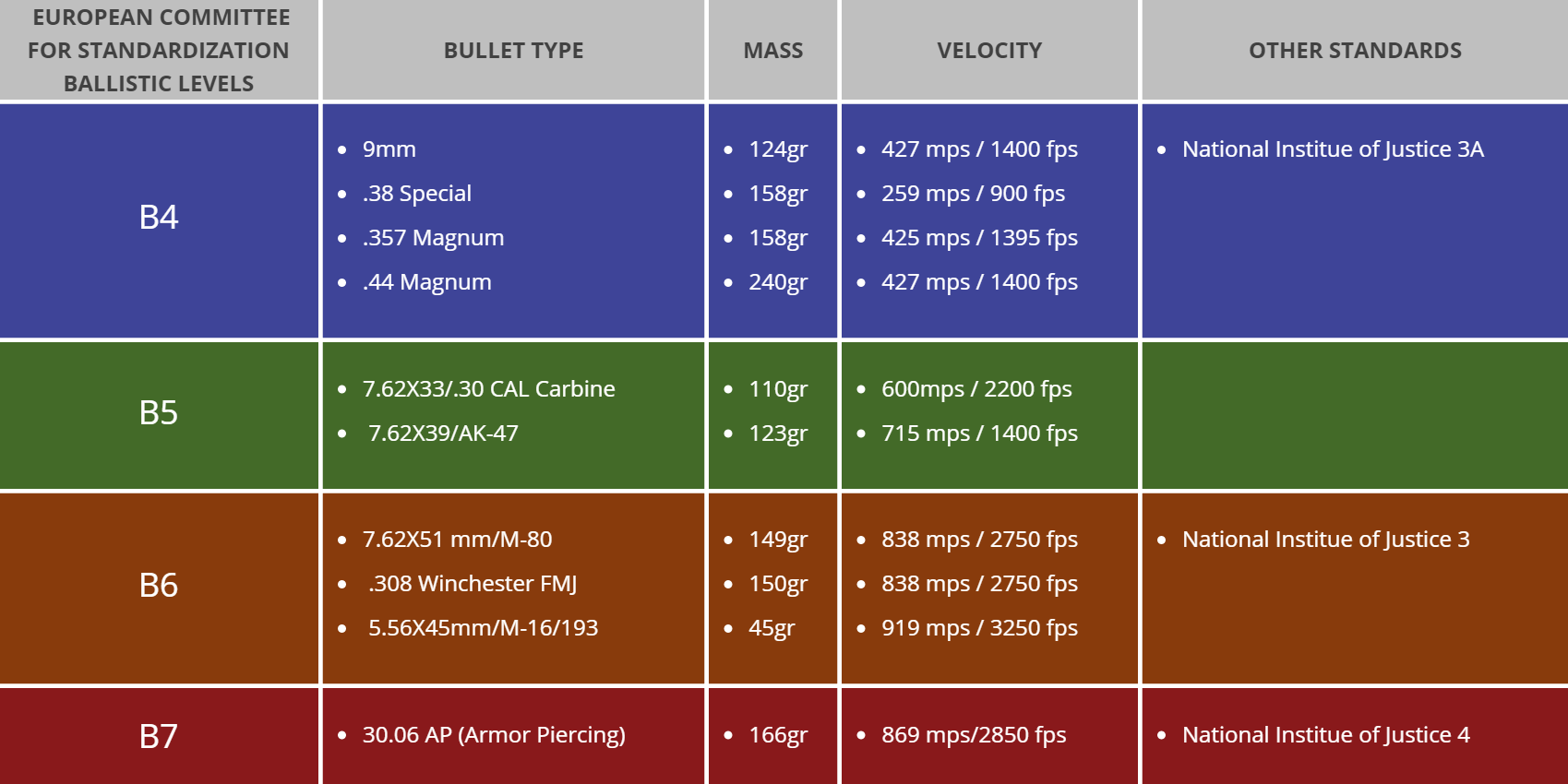
Ballistic protection levels for vehicles are primarily governed by the European Committee for Standardization (CEN) under EN 1063 for glazing (bullet-resistant glass) and related vehicle armor standards. The "B" or "BR" prefix stands for Bullet Resistance. Higher numbers indicate greater resistance to more powerful threats.
- B4 (BR4): Entry-level serious protection, focused on common handgun threats.
- B6 (BR6): The most popular civilian/executive level, defending against high-velocity rifle rounds.
- B7 (BR7): The highest commonly available civilian-grade protection, stopping armor-piercing rounds.
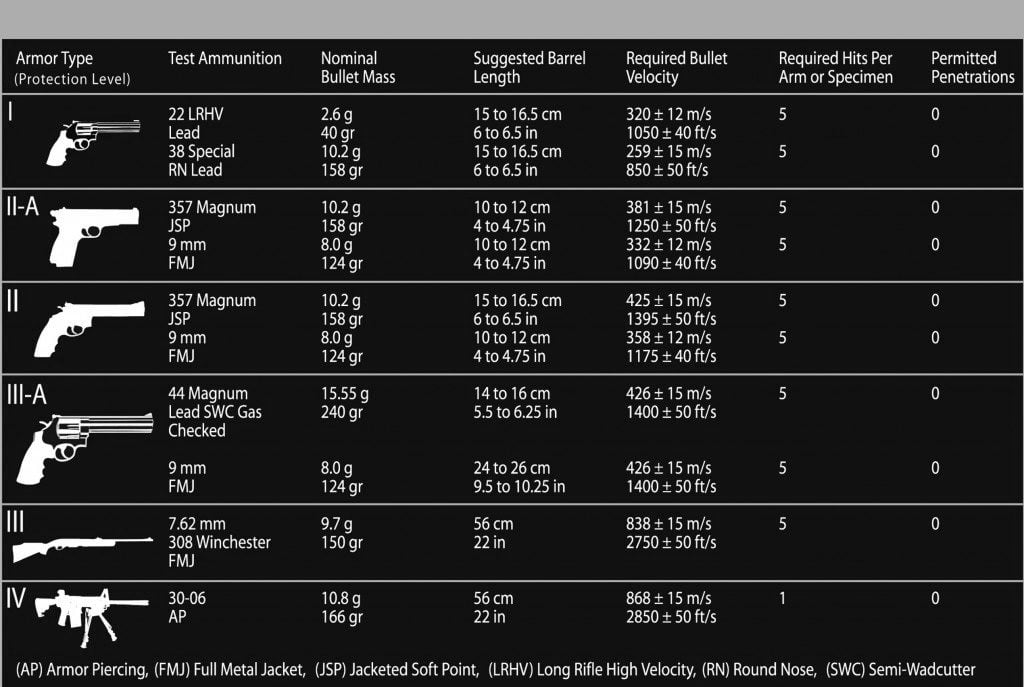
These differ from U.S. NIJ standards (primarily for body armor but cross-referenced for vehicles) and the more rigorous VPAM (German-based, whole-vehicle testing with stricter multi-hit and angle requirements). VPAM VR7 often aligns closely with CEN B6 but tests the entire vehicle system—including seams, overlaps, and weak points—making it more demanding.
Testing typically involves firing specific ammunition at defined velocities and distances (usually 5–10 meters), with requirements for no penetration and limited back-face deformation (spall). Multiple shots (often 3–5) are fired at different angles and locations to simulate real attacks.

B4 Protection: Handgun-Focused Urban Security
B4 is designed for lower-threat environments where the primary risks are handguns or improvised attacks (e.g., bricks, bottles). It is lightweight, discreet, and has minimal impact on vehicle performance, fuel economy, or handling.
What it stops:
- 9mm Luger/Parabellum (full metal jacket)
- .38 Special
- .357 Magnum
- .44 Magnum (the highest common handgun threat)
Key characteristics:
- Glass thickness: Typically 18–25 mm multi-layered polycarbonate and glass laminate.
- Body armor: Often aramid fibers like Kevlar or lightweight composites; minimal steel.
- Weight addition: 400–800 lbs (depending on vehicle size).
- Performance impact: Negligible—acceleration, braking, and top speed remain close to stock.
- Cost adder: $80,000–$150,000 for a full SUV conversion.
Ideal for: Everyday executive commuting in urban areas, families in moderate-risk cities, or cash-in-transit vehicles facing street-level threats. It offers excellent protection against carjackings or road rage incidents while keeping the vehicle looking completely standard.
Limitations: Will not reliably stop rifle rounds from AK-47, AR-15, or similar weapons common in escalated attacks.
B6 Protection: The Executive Sweet Spot for Rifle Threats
B6 represents the balance most sought after by CEOs, diplomats, and security-conscious individuals. It provides robust defense against assault rifles while remaining practical for civilian use.
What it stops:
- 7.62×51 mm NATO (.308 Winchester) full metal jacket
- 5.56×45 mm NATO (M16/M4 rounds)
- 7.62×39 mm (AK-47 style, often covered under related testing)
- High-velocity intermediate and battle rifle threats
Key characteristics:
- Glass thickness: Approximately 35–45 mm, with thicker laminates and advanced interlayers.
- Body armor: Hardened ballistic steel plates (often 6–10 mm thick) combined with composites; overlaps at seams for 360° protection.
- Weight addition: 1,000–2,000+ lbs, requiring upgraded suspension, brakes, and sometimes tires.
- Performance impact: Noticeable but manageable with modern engineering—powerful engines (e.g., in Cadillac Escalade or Mercedes G-Class) compensate effectively.
- Cost adder: $150,000–$350,000+.
Ideal for: High-profile executives, international travel in regions with elevated risks, or anyone concerned about targeted attacks involving rifles. B6 is the go-to for many armored SUVs in 2026, offering strong protection without the extreme bulk of higher levels.
Additional benefits: Often includes enhanced blast resistance against small explosives (e.g., hand grenades under the vehicle).
Limitations: May not stop dedicated armor-piercing (AP) rounds or .50 BMG threats.
 |
B7 Protection: Maximum Civilian-Grade Defense Against Armor-Piercing Threats
B7 delivers the pinnacle of protection available in most civilian or executive armored vehicles. It is reserved for the highest-risk scenarios.
What it stops:
- 7.62×51 mm NATO armor-piercing (AP) rounds
- High-velocity sniper and battle rifle armor-piercing ammunition
- Some .30-06 AP variants
Key characteristics:
- Glass thickness: 50–80 mm or more, with multiple layers of high-strength glass, polycarbonate, and specialized interlayers.
- Body armor: Thicker ballistic steel (often 10–15 mm+), advanced ceramics, or composite systems; extensive overlapping and seam reinforcement.
- Weight addition: 1,500–3,000+ lbs, significantly affecting dynamics unless the base vehicle is a large truck or SUV with heavy modifications.
- Performance impact: More pronounced—requires powerful engines, reinforced chassis, and professional tuning. Fuel efficiency drops noticeably.
- Cost adder: $250,000–$500,000+ (or higher for full custom builds).
Ideal for: Diplomatic missions, high-threat zones, or individuals facing credible risks of military-grade or armor-piercing attacks. B7 vehicles often double as mobile command centers.
Additional benefits: Superior blast and fragmentation resistance; can integrate run-flat tires, self-sealing fuel tanks, and underbody protection.
Limitations: Heavier, more expensive, and potentially more visible if not engineered discreetly. Extremely high levels (B7+ or VPAM higher) approach military specifications and may require special licensing.

Direct Comparison: B4 vs. B6 vs. B7
| Aspect | B4 | B6 | B7 |
|---|---|---|---|
| Primary Threats | Handguns (.9mm to .44 Mag) | Assault rifles (AK-47, M16, .308 NATO) | Armor-piercing rifle rounds |
| Glass Thickness | ~18-25 mm | ~35-45 mm | ~50-80+ mm |
| Weight Penalty | Low (400-800 lbs) | Medium (1,000-2,000 lbs) | High (1,500-3,000+ lbs) |
| Performance Impact | Minimal | Manageable with upgrades | Significant; requires heavy modifications |
| Cost Adder | Lower | Moderate | Highest |
| Best Use Case | Urban daily driving | Executive/corporate travel | High-risk diplomatic or extreme threats |
| Discretion Level | Highest (stealthy) | High | Moderate (thicker glass may be noticeable) |
| Blast Resistance | Basic | Good | Excellent |
Note: Exact specifications can vary by manufacturer, vehicle model, and testing lab. Always verify certifications (CEN, VPAM, or independent).
Materials and Engineering Behind the Levels
- B4: Relies heavily on aramid fabrics (Kevlar) and thinner glass laminates. Flexible and lightweight.
- B6: Introduces hardened steel plates and thicker composites. Requires precise overlapping to eliminate weak points.
- B7: Incorporates ceramics, ultra-hard steel, or advanced nanomaterials for AP resistance. Multi-hit capability is rigorously tested.
Modern armoring firms (e.g., INKAS, Alpine Armoring, Armormax) use computer modeling and layered composites to minimize weight while maximizing protection. Run-flat tires, reinforced doors, and blast-mitigating floors often complement these levels.
Choosing the Right Level: Key Considerations
- Threat Assessment: Analyze your environment—urban street crime (B4), regional instability with rifles (B6), or credible AP/sniper risks (B7).
- Vehicle Type and Usage: Larger SUVs handle higher levels better. Daily drivers prioritize discretion and performance.
- Budget and Trade-offs: Higher protection means higher costs, weight, and maintenance.
- Whole-Vehicle vs. Component Testing: Prefer manufacturers offering VPAM-style full-vehicle certification over plate-only tests.
- Legal and Insurance: Some jurisdictions regulate armored vehicles; insurers may offer discounts for certified protection.
- Future-Proofing: B6 is the most versatile "middle ground" in 2026 for most civilian needs.
Consult certified armoring specialists for a personalized threat analysis. Subtle, low-profile builds (maintaining factory appearance) are increasingly popular among "quiet millionaires."
Real-World Context and Trends in 2026
Following incidents like the 2024 assassination of a major CEO, demand for B6-level vehicles has surged among executives. Many opt for discreet conversions on Cadillac Escalade, Mercedes G-Class, or Range Rover platforms. B4 remains popular for lower-profile needs, while B7 is specified for international operations or extreme risk.
Emerging trends include hybrid/electric armored platforms and integration of AI threat detection. Lightweight nanomaterials are reducing weight penalties, making higher levels more drivable.
Conclusion: Informed Protection Saves Lives
B4, B6, and B7 form a clear progression: from everyday handgun defense to rifle protection to armor-piercing resilience. For most corporate or personal travel in moderate-to-high risk settings, B6 strikes the optimal balance of security, discretion, and usability. B4 suits lower threats with maximum subtlety, while B7 provides peace of mind in the most dangerous scenarios.
Ultimately, ballistic protection is about matching capability to realistic risks—not chasing the highest number. Work with reputable armoring companies that provide transparent testing data and full-vehicle certifications. In an uncertain world, the right level doesn't just stop bullets—it preserves freedom of movement and peace of mind.
(Word count: approximately 1,950)
This guide is based on established industry standards from CEN/EN 1063, VPAM, and leading manufacturers as of 2026. Always verify current certifications, as testing protocols can evolve.


评论
发表评论