B6 vs B7 Armored Vehicles: Factory Standards and Protection Levels
In the world of armored vehicles, protection levels like B6 and B7 represent critical benchmarks for ballistic resistance. These ratings, primarily based on European standards such as EN 1063 (for glazing) and EN 1522 (for opaque materials), define how well a vehicle can withstand various firearm threats. Factory-armored vehicles from reputable manufacturers adhere strictly to these standards, ensuring certified protection for high-risk environments. While B6 is a popular choice for civilian and executive protection, B7 offers the highest civilian-grade defense against more severe threats. This article compares B6 and B7 armored vehicles, exploring their standards, protection capabilities, practical differences, and ideal applications.
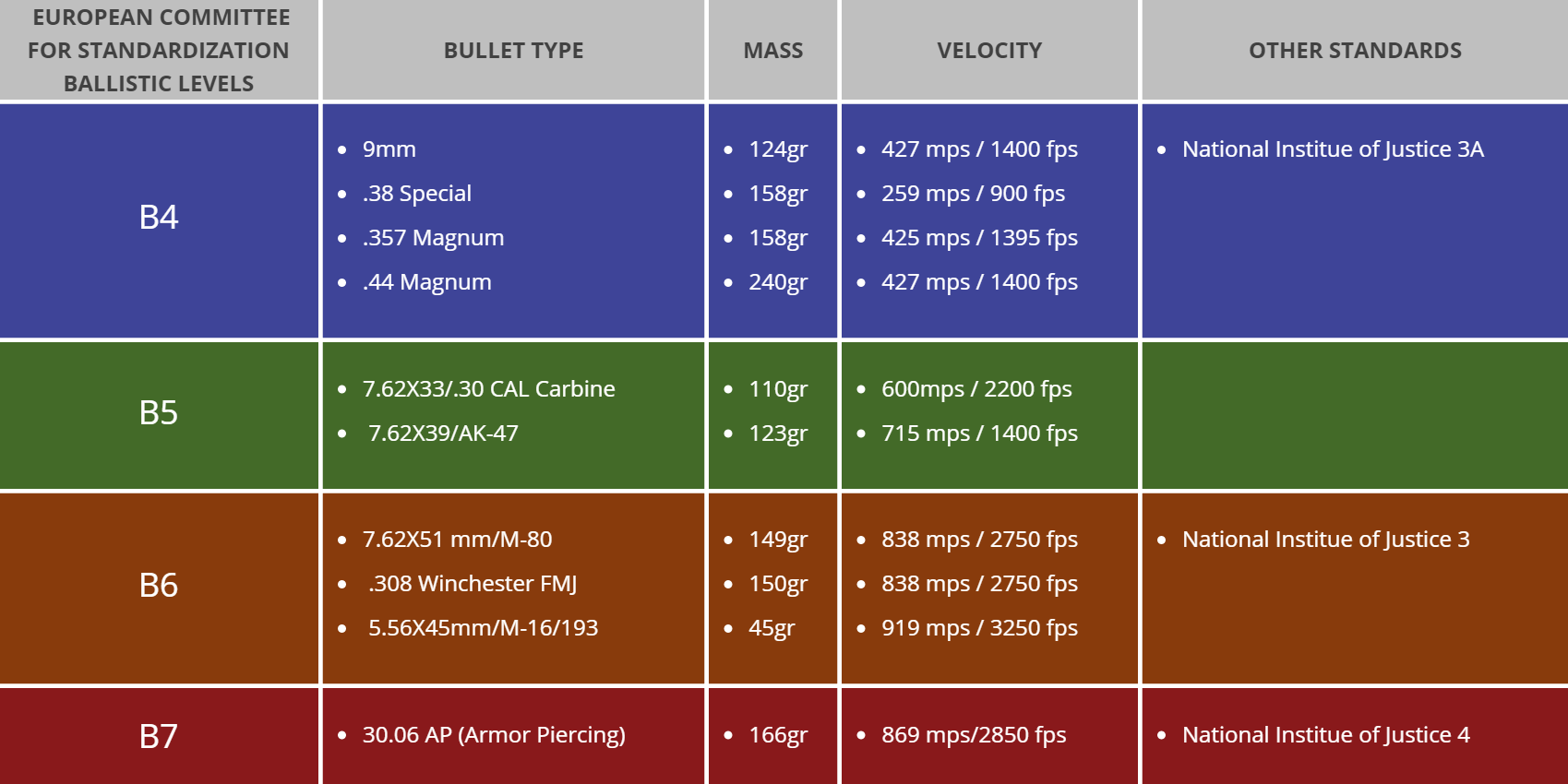
(Image: Ballistic protection level chart showing B6 and B7 threats, including bullet types and velocities.)
Understanding Ballistic Protection Standards
Armored vehicle protection is governed by international standards, with the European CEN/EN 1063 being the most widely referenced for civilian applications. These classify ballistic resistance from BR1 (lowest) to BR7 (highest civilian level). The "B" or "BR" designation refers to the threat level the vehicle can defeat, tested under controlled conditions with specific ammunition types, velocities, distances, and shot patterns.
Other standards include VPAM (German), often mapping B6 to VR7 and B7 to VR9 with more rigorous testing, and NIJ (US), where B6 roughly aligns with Level III and B7 with Level IV (armor-piercing resistance). Factory standards require independent certification, ballistic testing of the entire vehicle, and compliance documentation from manufacturers like INKAS, Armormax, and others.
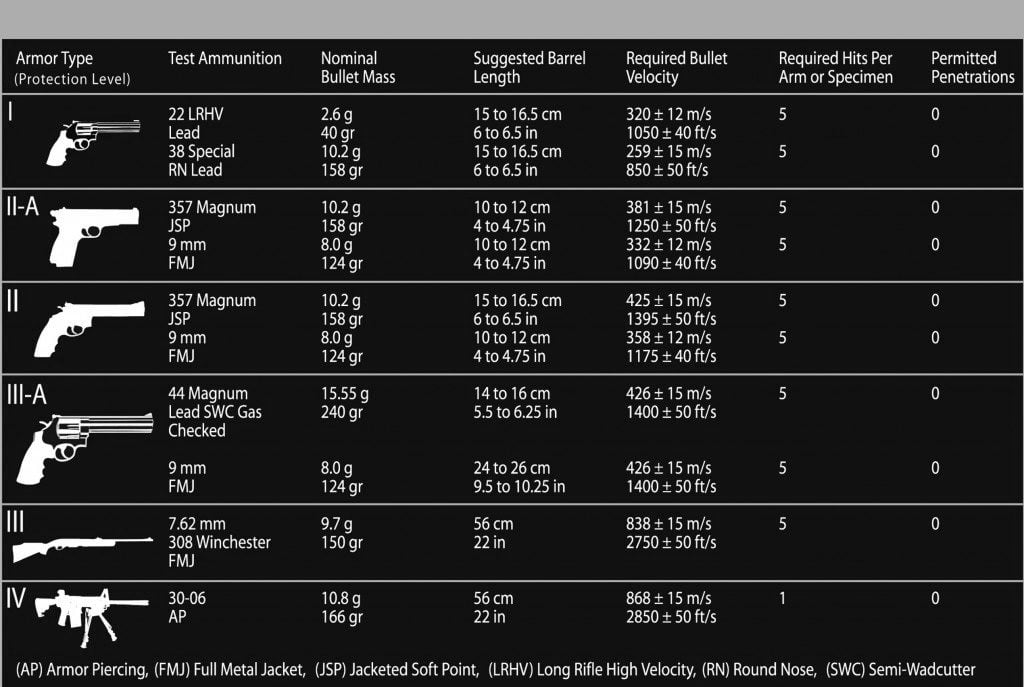
(Image: Detailed ballistic chart comparing various armor levels, including B6 and B7 equivalents.)
B6 Protection Level: High-Velocity Rifle Defense
B6 (or BR6) is one of the most common factory protection levels for civilian armored vehicles. It provides robust defense against high-powered rifle rounds, suitable for high-risk areas with assault rifle threats.
Key specifications under EN 1063:
- Threat: 7.62x51mm NATO FMJ, soft core, at high velocity.
- Weapons defeated: AK-47 variants, M16/AR-15, G3, FN FAL.
- Typical armor: 30-40mm glass, 5-8mm ballistic steel.
B6 vehicles add moderate weight (500-1500 kg), preserving reasonable handling on SUVs or sedans.
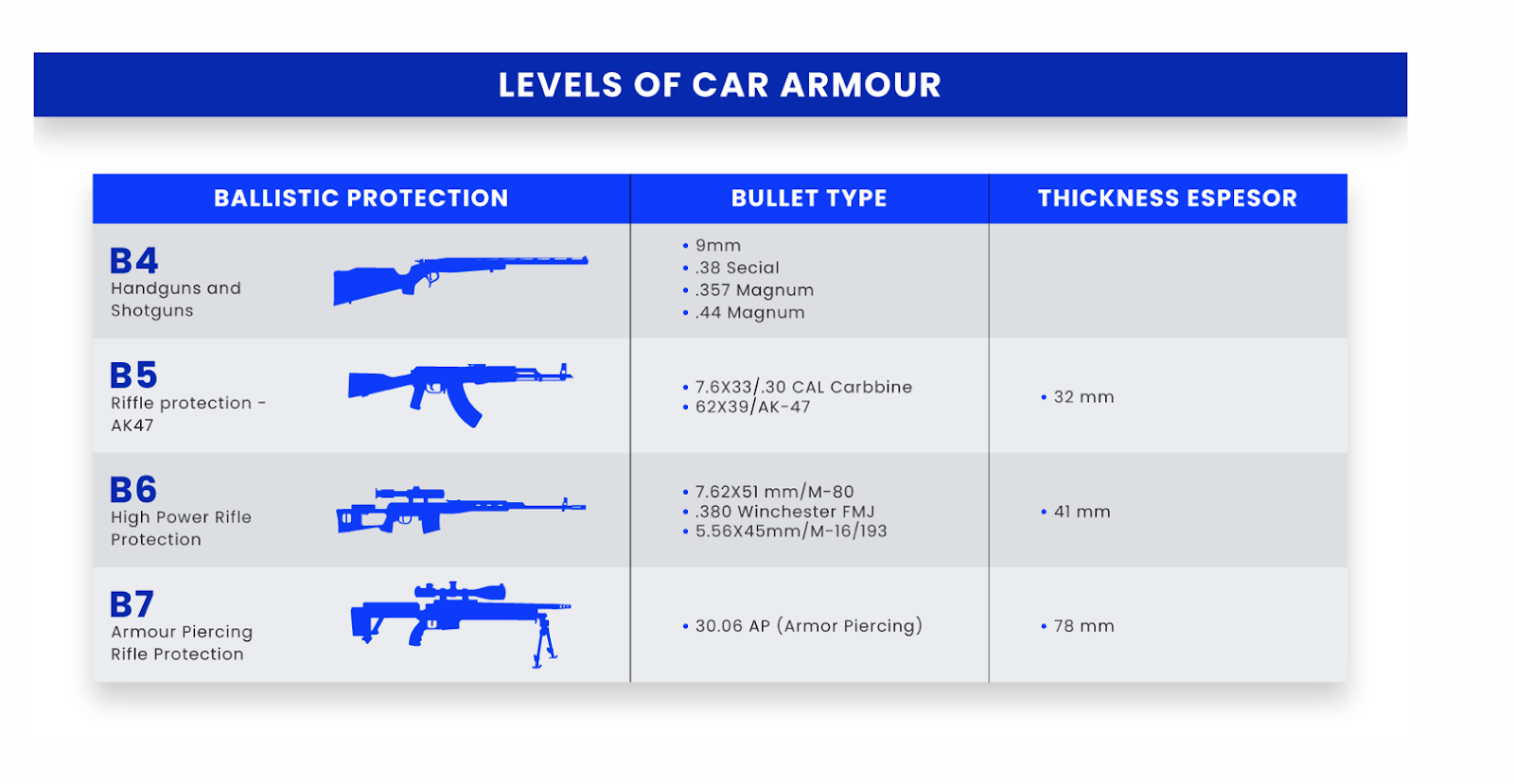
(Image: Visual comparison of B6 protection against high-power rifle threats, showing weapon icons and armor thickness.)
B7 Protection Level: Armor-Piercing Resistance
B7 (or BR7) is the top civilian ballistic level, stopping armor-piercing rounds from high-velocity rifles—essential in extreme threat scenarios like conflict zones.
Key specifications under EN 1063:
- Threat: 7.62x51mm NATO AP (hard core), or .30-06 AP.
- Weapons defeated: Sniper rifles with AP ammo, enhanced threats.
- Typical armor: 40-60mm+ glass, 8-12mm+ hardened steel.
B7 significantly increases weight (1000-2500+ kg), often requiring chassis, brake, and suspension upgrades.

(Image: Armored Chevrolet Suburban configured for B6/B7 protection levels, showing reinforced exterior.)
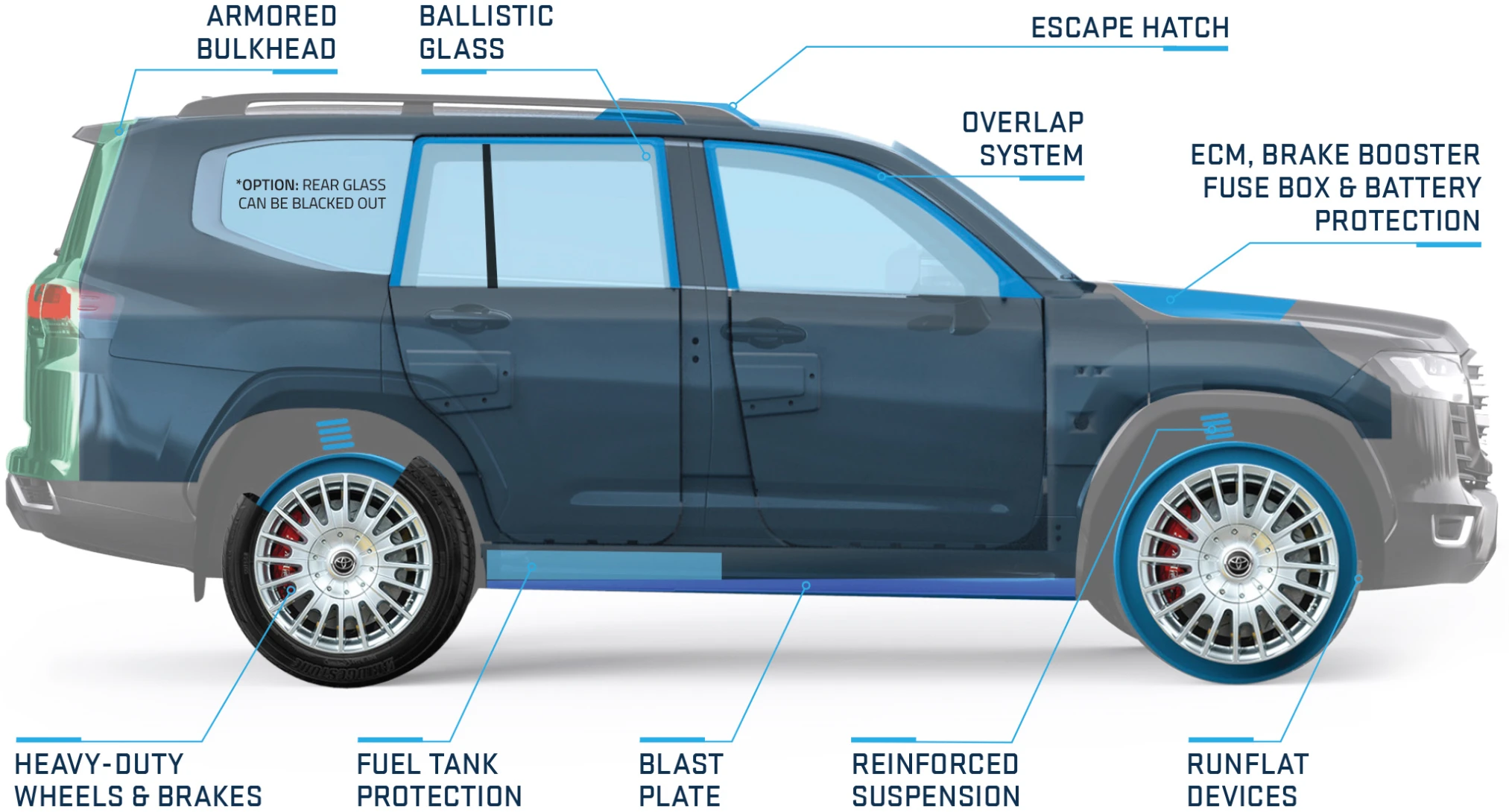
(Image: VR7/B7 equivalent armored Toyota Land Cruiser with detailed protection features diagram.)
Key Differences: B6 vs B7
| Aspect | B6 | B7 |
|---|---|---|
| Primary Threat | High-velocity FMJ rifle rounds | Armor-piercing rifle rounds |
| Equivalent Standards | VPAM VR7, NIJ III | VPAM VR9, NIJ IV |
| Weight Addition | Moderate (500-1500 kg) | High (1000-2500+ kg) |
| Vehicle Impact | Better handling & economy | Reduced performance, needs upgrades |
| Common Use | Executive/VIP transport | High-threat/government use |
(Image: Another ballistic level chart highlighting the jump from B6 to B7 in terms of AP resistance.)
Practical Considerations for Factory-Armored Vehicles
Choosing B6 or B7 depends on your threat assessment. B6 offers excellent rifle protection for most civilian needs without excessive compromises, while B7 is reserved for scenarios with AP ammunition risks. Factory armoring ensures certified testing, integrated features like run-flats and blast mitigation, and balanced performance.

(Image: Modern armored Chevrolet Suburban in black, exemplifying factory B6/B7 builds.)
Conclusion
B6 and B7 represent distinct tiers in armored vehicle protection: B6 for reliable high-velocity rifle defense in a practical package, and B7 for superior AP resistance at the expense of added weight and complexity. Factory standards provide confidence through rigorous certification. Always match the level to your real risks—over- or under-armoring can affect usability and safety. For more vehicle-related tips, check our guide on Offroad Camper Maintenance Tips.
B6 vs B7 Armored Vehicles: Factory Standards and Protection Levels
In the world of armored vehicles, protection levels like B6 and B7 represent critical benchmarks for ballistic resistance. These ratings, primarily based on European standards such as EN 1063 (for glazing) and EN 1522 (for opaque materials), define how well a vehicle can withstand various firearm threats. Factory-armored vehicles from reputable manufacturers adhere strictly to these standards, ensuring certified protection for high-risk environments. While B6 is a popular choice for civilian and executive protection, B7 offers the highest civilian-grade defense against more severe threats. This article compares B6 and B7 armored vehicles, exploring their standards, protection capabilities, practical differences, and ideal applications.
(Image: Ballistic protection level chart showing B6 and B7 threats, including bullet types and velocities.)
Understanding Ballistic Protection Standards
Armored vehicle protection is governed by international standards, with the European CEN/EN 1063 being the most widely referenced for civilian applications. These classify ballistic resistance from BR1 (lowest) to BR7 (highest civilian level). The "B" or "BR" designation refers to the threat level the vehicle can defeat, tested under controlled conditions with specific ammunition types, velocities, distances, and shot patterns.
Other standards include VPAM (German), often mapping B6 to VR7 and B7 to VR9 with more rigorous testing, and NIJ (US), where B6 roughly aligns with Level III and B7 with Level IV (armor-piercing resistance). Factory standards require independent certification, ballistic testing of the entire vehicle, and compliance documentation from manufacturers like INKAS, Armormax, and others.
(Image: Detailed ballistic chart comparing various armor levels, including B6 and B7 equivalents.)
B6 Protection Level: High-Velocity Rifle Defense
B6 (or BR6) is one of the most common factory protection levels for civilian armored vehicles. It provides robust defense against high-powered rifle rounds, suitable for high-risk areas with assault rifle threats.
Key specifications under EN 1063:
- Threat: 7.62x51mm NATO FMJ, soft core, at high velocity.
- Weapons defeated: AK-47 variants, M16/AR-15, G3, FN FAL.
- Typical armor: 30-40mm glass, 5-8mm ballistic steel.
B6 vehicles add moderate weight (500-1500 kg), preserving reasonable handling on SUVs or sedans.
(Image: Visual comparison of B6 protection against high-power rifle threats, showing weapon icons and armor thickness.)
B7 Protection Level: Armor-Piercing Resistance
B7 (or BR7) is the top civilian ballistic level, stopping armor-piercing rounds from high-velocity rifles—essential in extreme threat scenarios like conflict zones.
Key specifications under EN 1063:
- Threat: 7.62x51mm NATO AP (hard core), or .30-06 AP.
- Weapons defeated: Sniper rifles with AP ammo, enhanced threats.
- Typical armor: 40-60mm+ glass, 8-12mm+ hardened steel.
B7 significantly increases weight (1000-2500+ kg), often requiring chassis, brake, and suspension upgrades.
(Image: Armored Chevrolet Suburban configured for B6/B7 protection levels, showing reinforced exterior.)
(Image: VR7/B7 equivalent armored Toyota Land Cruiser with detailed protection features diagram.)
Key Differences: B6 vs B7
| Aspect | B6 | B7 |
|---|---|---|
| Primary Threat | High-velocity FMJ rifle rounds | Armor-piercing rifle rounds |
| Equivalent Standards | VPAM VR7, NIJ III | VPAM VR9, NIJ IV |
| Weight Addition | Moderate (500-1500 kg) | High (1000-2500+ kg) |
| Vehicle Impact | Better handling & economy | Reduced performance, needs upgrades |
| Common Use | Executive/VIP transport | High-threat/government use |
(Image: Another ballistic level chart highlighting the jump from B6 to B7 in terms of AP resistance.)
Practical Considerations for Factory-Armored Vehicles
Choosing B6 or B7 depends on your threat assessment. B6 offers excellent rifle protection for most civilian needs without excessive compromises, while B7 is reserved for scenarios with AP ammunition risks. Factory armoring ensures certified testing, integrated features like run-flats and blast mitigation, and balanced performance.
(Image: Modern armored Chevrolet Suburban in black, exemplifying factory B6/B7 builds.)
Conclusion
B6 and B7 represent distinct tiers in armored vehicle protection: B6 for reliable high-velocity rifle defense in a practical package, and B7 for superior AP resistance at the expense of added weight and complexity. Factory standards provide confidence through rigorous certification. Always match the level to your real risks—over- or under-armoring can affect usability and safety. For more vehicle-related tips, check our guide on Offroad Camper Maintenance Tips.
Word count: Approximately 1050.


评论
发表评论